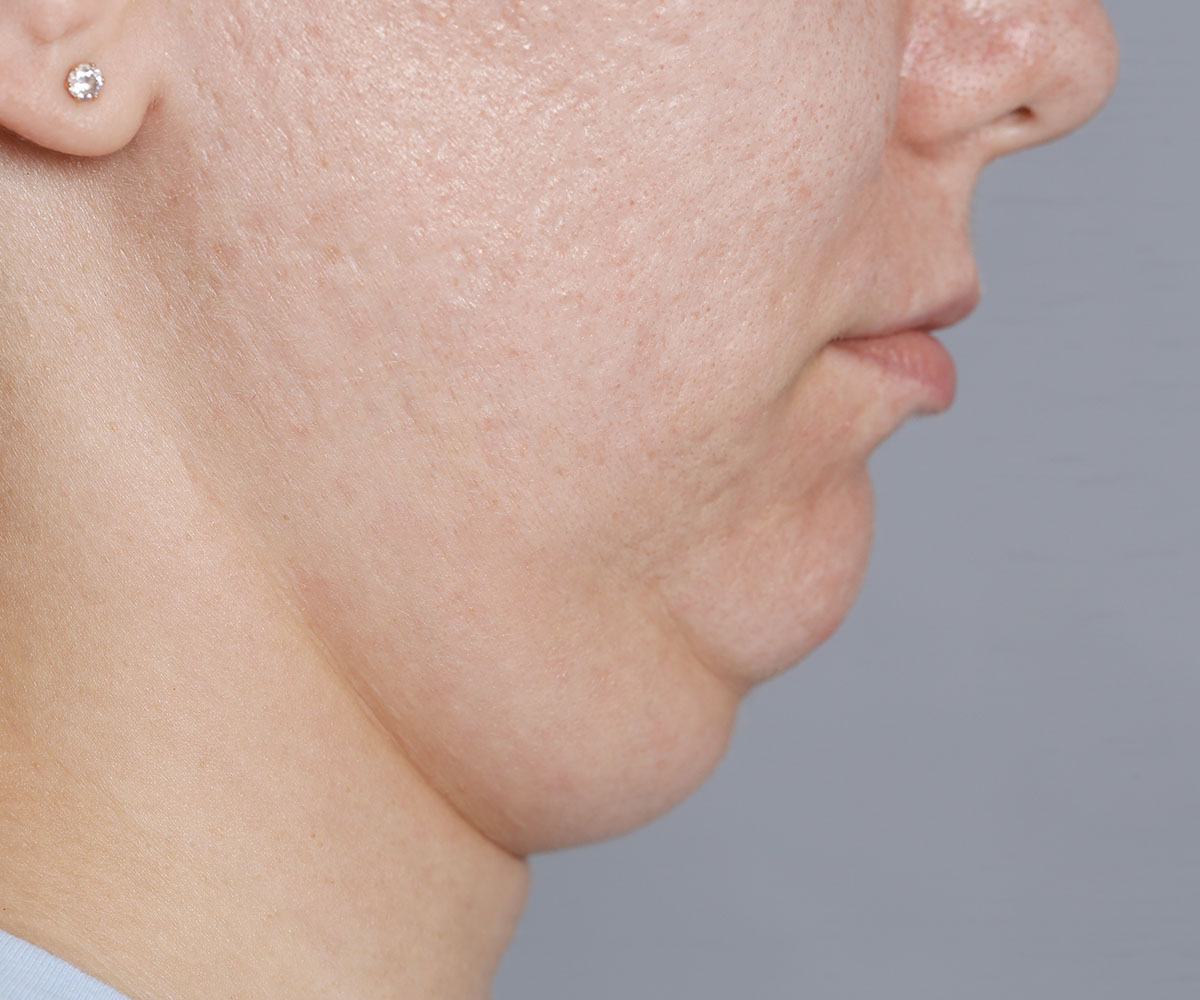

Chin liposuction, also referred to as submental liposuction, is a surgical procedure intended to remove excess adipose tissue from the area beneath the chin and upper neck. The procedure targets localized fat accumulation that contributes to loss of definition in the chin–neck angle.
Candidates for this procedure typically present with adequate skin elasticity and isolated submental fullness, rather than significant skin laxity or muscle banding, which may require alternative or additional treatments.
Surgical planning is based on anatomic assessment of fat depth, skin quality, and lower facial proportions, allowing for controlled fat removal while maintaining structural integrity and natural contour of the neck and jawline.


A detailed evaluation of submental fat distribution, skin elasticity, and chin–neck anatomy is performed to determine candidacy and surgical approach.
Chin liposuction is typically performed under local anesthesia with or without sedation, in a controlled surgical environment focused on patient comfort and safety.
Small, discreet incisions are placed in inconspicuous areas beneath the chin or behind the ears to allow access to the targeted fat deposits.
A thin cannula is used to carefully remove excess fat, refining the contour of the chin and jawline while maintaining smooth, even results.
Incisions are closed with attention to healing, and compression garments may be applied to support tissue adaptation during early recovery.
Removes localized submental fat to enhance definition along the jawline and chin–neck angle.
Addresses isolated fat deposits beneath the chin that may not respond to diet or exercise.
Performed through small incisions with limited tissue disruption compared to more extensive neck procedures.
Relies on adequate skin elasticity to allow natural retraction and smoother contouring following targeted fat removal.
Typically associated with a shorter recovery period compared to more invasive facial surgeries.
May be safely combined with other facial procedures when clinically appropriate based on anatomy and treatment goals.

Candidates typically have localized fat beneath the chin that contributes to a softened chin–neck angle or reduced jawline definition without significant skin excess.
Good skin elasticity is important, as skin retraction helps the area conform smoothly after targeted fat removal and supports a more refined contour over time.
Candidates are generally in good overall health and should not have medical conditions that could impair healing or increase anesthesia risk during or after surgery.
Significant skin laxity or platysmal banding may require additional procedures, such as a neck lift, for optimal contour and long-term aesthetic balance.
Pre- and post-operative care are essential components of chin liposuction. Proper preparation and structured follow-up support safe healing, contour adaptation, and optimal surgical outcomes.
Before surgery, patients receive medical instructions focused on procedural preparation, medication guidance, and overall surgical readiness.
After surgery, post-operative guidance supports swelling management, healing progression, and appropriate follow-up during recovery.
Yes. Chin liposuction focuses on removing localized fat beneath the chin, while a neck lift addresses skin laxity and muscle banding. The appropriate procedure depends on anatomy, skin quality, and degree of laxity.
Recovery varies by individual, but most patients experience temporary swelling and discomfort that improve over several weeks. Normal activities are typically resumed gradually based on medical guidance.
Chin liposuction relies on existing skin elasticity for retraction after fat removal. Significant skin laxity may require additional procedures to achieve optimal contour.
In some cases, chin liposuction may be safely combined with other facial procedures when clinically appropriate. This is determined during consultation based on anatomy and overall treatment goals.
Trusted and Rated 4.5 Stars on Google
Lorem ipsum dolor sit amet, consectetur adipiscing elit. Sed euismod, ligula vel bibendum varius, lacus nisi vulputate eros


Contact us