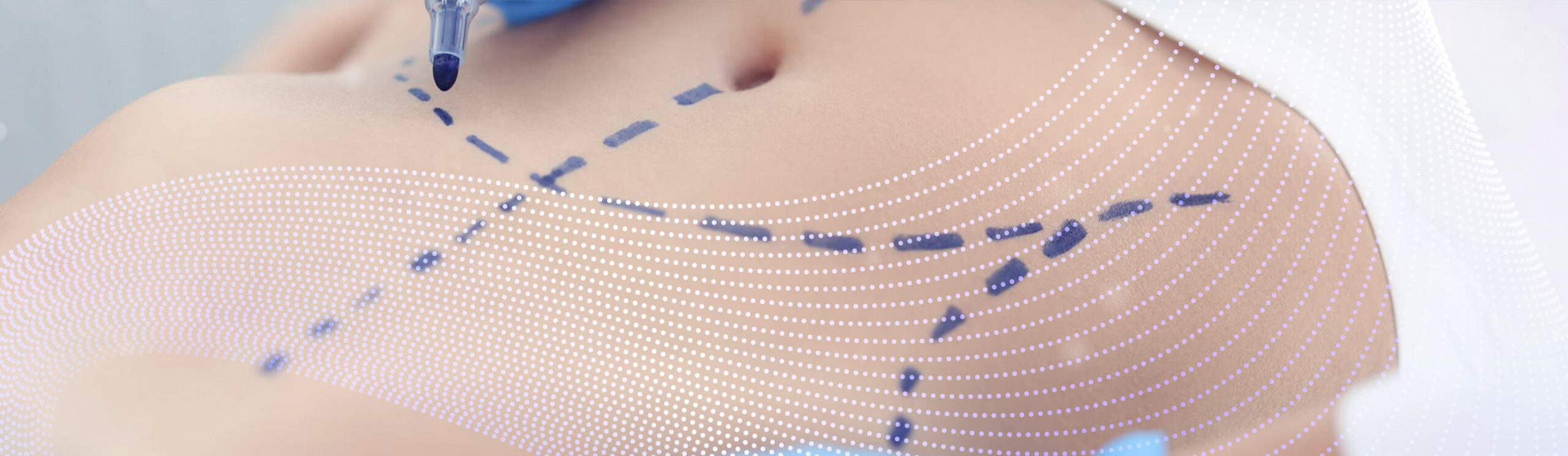
A tummy tuck, medically known as abdominoplasty, is designed to address excess abdominal skin, weakened musculature, and contour irregularities that may persist despite diet and exercise. While often associated with aesthetic refinement, the procedure also focuses on restoring structural support within the abdominal wall.
The objective is not simply a flatter appearance, but a smoother, proportionate abdominal profile guided by anatomical planning.

What the Procedure Involves
A tummy tuck typically involves the removal of excess skin and the tightening of the abdominal wall when muscle separation, such as diastasis recti, is present. The procedure may also include liposuction to improve contour transitions between the abdomen and surrounding areas.
Muscle repair is performed when necessary to restore midline support and improve abdominal firmness. The skin is then redraped to create a smoother surface contour while maintaining natural body proportions.
Surgical planning is based on skin quality, muscle condition, fat distribution, and overall body structure.
Who May Be a Candidate?
Candidates are generally individuals in good overall health who have excess abdominal skin, muscle laxity, or contour irregularities that cannot be corrected through exercise alone. Stable body weight is an important factor, as significant fluctuations may affect long-term outcomes.
This procedure is commonly considered after pregnancy or significant weight changes when the abdominal wall has lost structural integrity.
A detailed consultation helps determine whether a tummy tuck is appropriate based on anatomy and recovery expectations.
Recovery and Healing
Recovery involves temporary swelling, compression garment use, and activity restrictions during the early healing phase. When muscle repair is performed, additional time may be required before resuming strenuous activity.
Final contour refinement develops gradually as tissues settle and swelling resolves. Following postoperative instructions closely supports safe healing and stable results.
A well-performed tummy tuck aims for a natural, proportionate abdominal contour rather than an exaggerated or artificial appearance. Structural correction, careful incision planning, and realistic surgical goals are central to achieving refined results.
When guided by anatomy and responsible planning, the procedure supports improved abdominal firmness and a smoother overall silhouette.